Saint-Barthélemy is most often photographed from above — turquoise lagoons, white-sand crescents, hillside villas catching the afternoon light. But the island's real magic begins a few feet below the surface. The waters around St. Barth are part of a protected marine reserve, the visibility regularly tops 20 meters, and the reefs are alive with fish, turtles, and the occasional reef shark. For snorkelers, the island is one of the most rewarding stops in the entire Lesser Antilles.
Why St. Barth is a snorkeler's paradise
Since 1996, the seas around St. Barth have been protected as the Réserve Naturelle de Saint-Barthélemy. Spanning more than 1,200 hectares across five separate zones, the reserve restricts anchoring, fishing, and shell collecting — which means the marine life has been left undisturbed for nearly thirty years. Add to that the island's geography (sheltered bays, shallow reefs, and a gentle drop-off to deeper water) and you have ideal conditions for swimming with a mask and fins. Most beaches require nothing more than a short walk from the sand to find something interesting.
Anse de Colombier — the favorite of locals
If you ask ten St. Barth residents where to snorkel, nine will say Colombier. This crescent of sand on the northwest tip of the island is reachable only by a 20-minute hike from the road or by boat, which keeps the crowds light. The bay sits inside the marine reserve, and the rocky reefs on both ends are teeming with life: parrotfish in extraordinary colors, schools of sergeant majors, and — if you're patient — green sea turtles grazing in the seagrass beds. The northern end, near the rocky point, is generally the most active spot, and the water tends to be clearest in the morning before any breeze picks up.
Petite Anse and Anse de Marigot — gentle and uncrowded
For families or first-time snorkelers, the small bays between Anse des Cayes and Marigot offer calmer entry points. Petite Anse, a tiny cove just east of Anse des Cayes, has shallow water, a sandy bottom, and a small reef on the east side that is perfect for spotting blue tangs and angelfish. Anse de Marigot, a few minutes further east, has a similar profile — gentle, sheltered, and rarely busy. Neither requires equipment more elaborate than a basic mask and a pair of fins.
Île Fourchue — for stronger swimmers
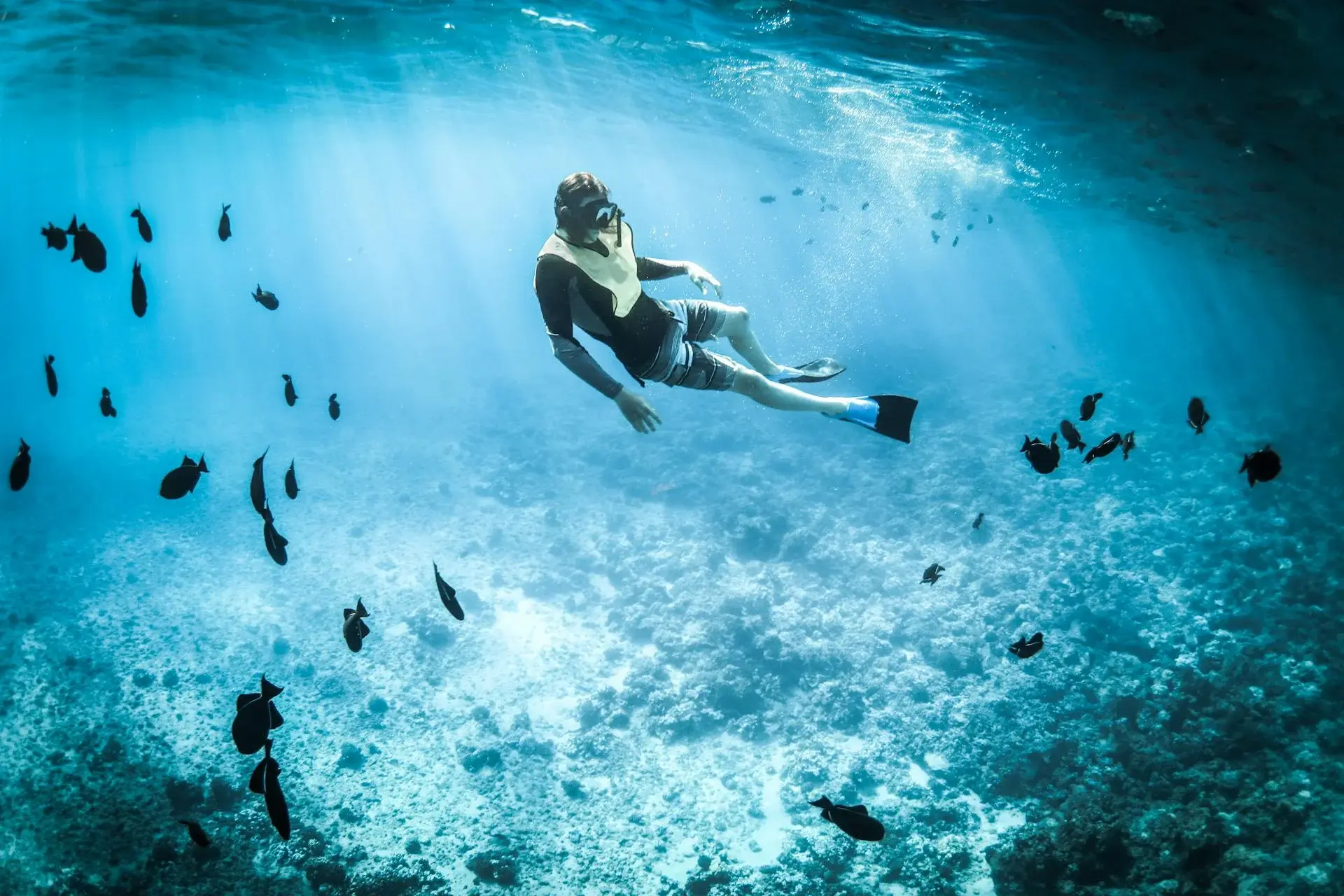
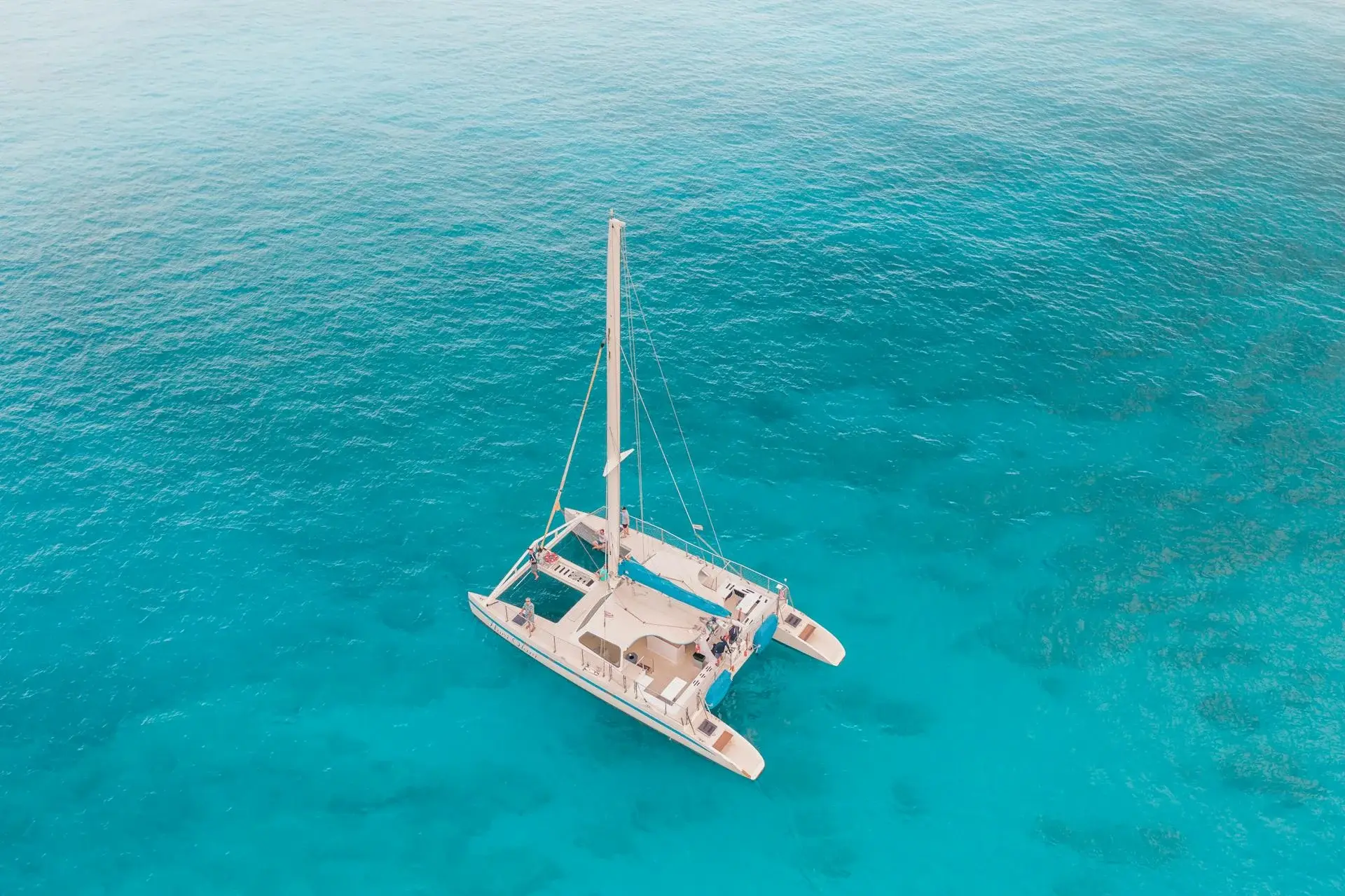
A short boat ride northwest of Gustavia brings you to Île Fourchue, an uninhabited volcanic islet that is one of the highlights of any yacht charter day. The snorkeling along its cliffs is genuinely world-class: schools of jackfish, the occasional barracuda, and a reliable swim-through arch that photographs beautifully. The water is deeper here and the currents stronger, so it suits confident swimmers. Most charter operators include a Fourchue stop on their itineraries — our piece on yacht charters in St. Barth covers the planning details.
Shell Beach and Gustavia
You don't have to leave town to find a good spot. Shell Beach, just below Fort Karl in Gustavia, is named for the carpet of small shells along its shore — but the rocky reef on the south end has surprisingly active marine life, including small octopuses if you look closely in the cracks. It's the kind of place where you can swim before lunch, walk into Gustavia for a salad and a glass of rosé, and be back on the sand within the hour.
Read also : The Famous Beach of Gouverneur in St Barts
Grand Cul-de-Sac and the lagoon
The eastern lagoon at Grand Cul-de-Sac is shallow, protected by an outer reef, and warm year-round. While the visibility isn't quite as crisp as at Colombier, the lagoon is one of the best places on the island to spot sea turtles grazing in the seagrass. Kitesurfers share the water during windy afternoons, but mornings are usually calm and clear. It is also one of the most family-friendly spots — children can stand up almost everywhere.
What you'll see underwater
St. Barth's reefs are home to over 200 species of fish. Expect to encounter parrotfish in five or six colors, sergeant majors, blue tangs, butterflyfish, and the occasional moray eel tucked into a crevice. Green and hawksbill turtles are common in the seagrass beds, and small reef sharks — nervous and harmless — are sometimes seen in deeper water near Fourchue. Conch shells dot the sandy bottoms, but remember: collecting anything from inside the marine reserve is forbidden.
Best time and what to bring
The island's snorkeling season runs nearly year-round. The best visibility comes between December and May, when the trade winds blow steady and the seas stay calm. The hurricane months from August through October can bring stirred-up water, but the in-between weeks are often spectacularly clear. Most villas can supply masks and fins on request, and several beach kiosks rent gear by the day. Bring reef-safe sunscreen — St. Barth has banned the most damaging chemical filters since 2020 to protect the corals.
Related : Best Outdoor things to do in St Barth
Planning your stay
The right base makes a difference. Hillside villas above Colombier or in Anse des Cayes put you within walking distance of some of the island's best snorkeling, while properties on Grand Cul-de-Sac open directly onto the lagoon. Browse the 100% Villas collection to find a home that matches the way you want to spend your days — and your mornings underwater.
Plan Your Stay
Ready to Experience St. Barth?
Browse our collection of over 100 luxury villas and start planning your unforgettable Caribbean getaway.
Explore Our Villas